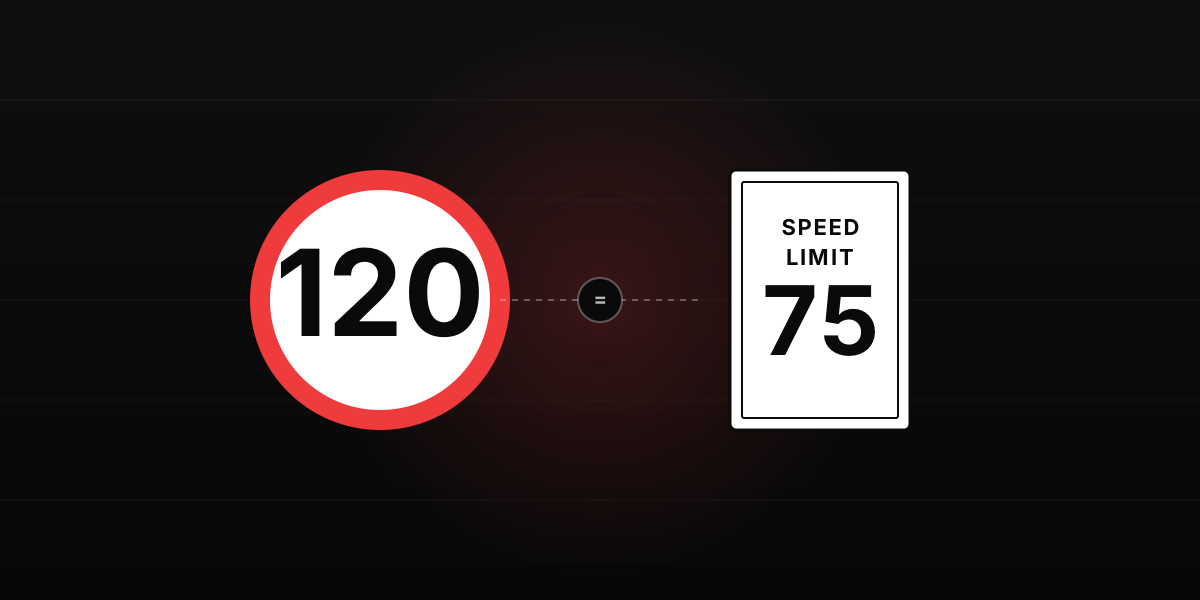
The Northern Territory posts Australia's highest speed limit: 130 km/h on the Stuart, Barkly, Victoria and Arnhem highways. Other roads outside built-up areas default to 110 km/h, and the urban default is 60 km/h, the only jurisdiction in the country above 50. The Territory famously had no rural speed limits at all until 2007 and ran an open-limit trial on the Stuart Highway from 2014 to 2016 before settling back at 130.
Northern Territory speed limits at a glance
| Road type | Limit |
|---|---|
| Built-up areas (default) | 60 kph (37 mph) |
| School zones | 40 kph (25 mph) |
| Rural roads and highways | 110 kph (68 mph) |
| Motorways / freeways | 130 kph (81 mph) |
About speed limits in Northern Territory
Four highways carry the 130 km/h maximum: the Stuart Highway running the length of the Territory from Darwin toward South Australia, the Barkly Highway east to the Queensland border, the Victoria Highway west toward Kununurra, and the Arnhem Highway out to Kakadu. No other Australian jurisdiction posts above 120 km/h, and only British Columbia matches Australia at that mark in Canada. Off these corridors, the default outside built-up areas is 110 km/h unless signed otherwise, which still exceeds the rural default in every state. Posted limits step down through 100 and 80 on lesser sealed roads, and unsealed roads demand far less than the legal maximum regardless of what the sign allows.
The Territory's open-limit history is unique in the developed world. Until 1 January 2007 there were simply no speed limits outside towns, and the 130 km/h cap introduced that year was bitterly contested. In February 2014 the government reopened a 204 km section of the Stuart Highway between Barrow Creek and Alice Springs with no limit at all, later extending open limits to about 300 km of the corridor. Monitoring during the trial found most drivers settled around 140 km/h rather than racing flat out. The trial ended in November 2016 after a change of government, when derestriction signs came down and 130 km/h signs went back up, and every government since has left the cap in place.
Inside built-up areas the Territory again does its own thing: the default is 60 km/h, not the 50 km/h used everywhere else in Australia, although many towns and remote communities have gazetted 50 km/h or lower defaults, and Darwin's CBD and suburban shopping precincts carry posted 40 and 50 zones. School zones are 40 km/h on school days during the hours shown on the sign, broadly aligned with the 7 am to 5 pm window used at many sites. Drivers arriving from interstate should check signage at town boundaries carefully, because the same unsigned suburban street that means 50 in Adelaide or Sydney legally means 60 in Darwin, Palmerston or Katherine.
The 130 km/h limit comes with a sober safety context: the Territory records the highest road fatality rate per capita in Australia, several times the national average, with remote single-vehicle rollovers, unrestrained occupants and alcohol heavily represented. Enforcement is concentrated where the people are, with fixed and mobile cameras in Darwin, Palmerston, Katherine and Alice Springs, while patrols on the remote highway network are necessarily thin across 1.35 million square kilometres. The practical hazards at 130 km/h are road trains up to 53.5 metres long, wandering stock and wildlife at dawn and dusk, heat-stressed tyres, and flood-damaged surfaces in the wet season, all far from help if something goes wrong.
Enforcement
NT Police concentrate patrols and fixed and mobile cameras in Darwin, Palmerston, Katherine and Alice Springs, with school zones and urban arterials the routine targets. On the remote 130 km/h highways enforcement is sparse simply because of distance, but highway patrols do run the Stuart Highway corridor, and drink-driving and seatbelt operations accompany speed enforcement at roadblocks during holiday periods.
Tolerance
No tolerance is published, and while remote-area enforcement is thin, urban cameras in Darwin and Alice Springs ticket at tight margins like any other capital. The 130 and 110 km/h limits are ceilings for perfect conditions; police routinely charge drivers under general driving offences for travelling at the limit in dust, rain or roadworks where that speed is plainly unsafe.
Speeding fines in Northern Territory
Fines run from about $150 for less than 15 km/h over to $300 with three demerit points for 15 to 30 over, and roughly $600 for 30 to 45 over. Beyond 45 km/h over the limit the penalty reaches about $1,000 or more with six points and automatic licence suspension of at least three months, and prosecution for driving at a dangerous speed can bring fines of up to 20 penalty units and imprisonment for repeat offenders.
Frequently asked questions
What is the highest speed limit in the Northern Territory?
130 km/h, posted on the Stuart, Barkly, Victoria and Arnhem highways. It is the highest limit in Australia; all other Territory roads outside built-up areas default to 110 km/h unless signed otherwise.
Did the Northern Territory really have no speed limits?
Yes. Rural roads had no limits at all until 1 January 2007, when a 130 km/h cap was introduced. An open-limit trial returned to about 300 km of the Stuart Highway between 2014 and 2016, during which most drivers averaged around 140 km/h, before the 130 km/h limit was restored in November 2016.
What is the urban speed limit in the Northern Territory?
The default in built-up areas is 60 km/h, the only default above 50 km/h in Australia, though many towns and communities have gazetted 50 km/h or lower and Darwin posts 40 and 50 zones in busy precincts. School zones are 40 km/h on school days during signed hours.
Is it safe to drive at 130 km/h in the NT?
It is legal on the four designated highways in good conditions, but the Territory has Australia's highest per-capita road fatality rate. Road trains, wildlife at dawn and dusk, heat, long distances between fuel and help, and wet season damage mean police expect drivers to run well below 130 whenever conditions are less than ideal.
Speed limits in nearby states
- South Australia speed limit — highway, rural, and school-zone limits.
- Western Australia speed limit — highway, rural, and school-zone limits.
- Queensland speed limit — highway, rural, and school-zone limits.
Related tools
- Convert KPH to MPH — convert any speed reading between units.
- Car speed test — verify your speedometer accuracy.
- Live GPS speedometer — see your actual speed in the browser.
- Stopping distance calculator — how far you need to brake from each speed.
- Australia speed limits overview — national defaults and how states differ.