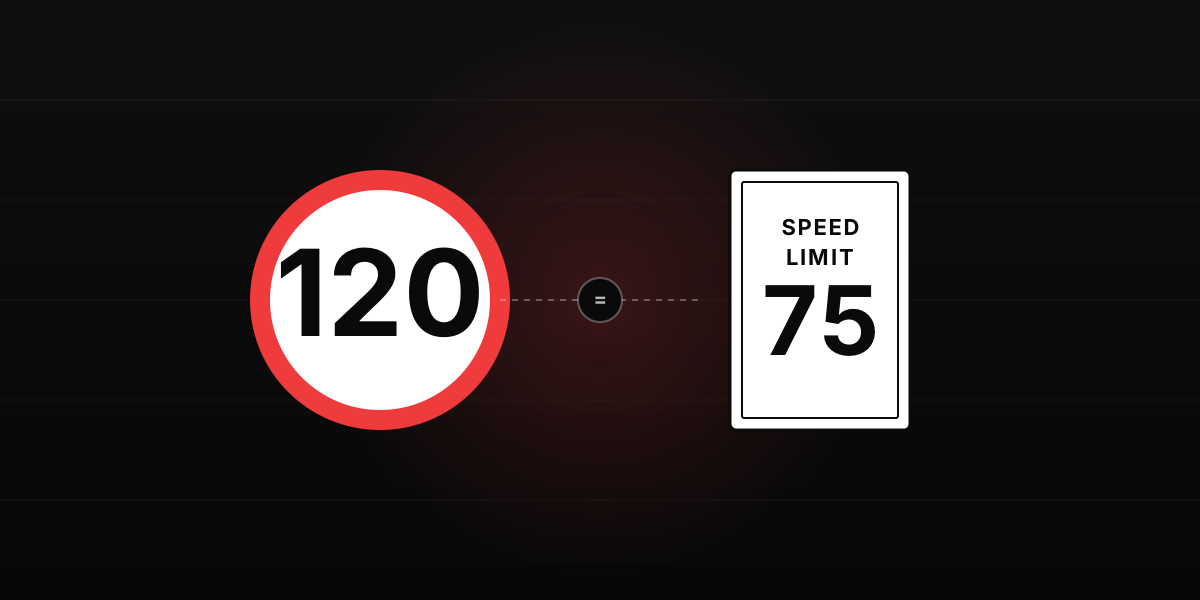
British Columbia posts the highest speed limit in Canada: 120 km/h on the Coquihalla Highway between Hope and Kamloops. Other divided highways run at 100 to 110 km/h, the default is 80 km/h outside municipalities and 50 km/h inside them. Drive 40 km/h or more over any limit and police will impound the vehicle on the spot for at least seven days.
British Columbia speed limits at a glance
| Road type | Limit |
|---|---|
| Cities and towns (default) | 50 kph (31 mph) |
| School / playground zones | 50 kph (31 mph) |
| Rural two-lane highways | 80 kph (50 mph) |
| Major highways / freeways | 100-120 |
About speed limits in British Columbia
BC raised limits on 33 rural corridors in 2014 after a provincial speed review, introducing Canada's first and only 120 km/h zones on the Coquihalla (Highway 5), the Okanagan Connector (Highway 97C) and the Island Highway (Highway 19). Crash data then pushed the province the other way: in November 2018 it rolled back 15 sections covering some 570 km by 10 km/h, dropping the Connector and the Parksville to Campbell River run of Highway 19 to 110 km/h. The Coquihalla was the exception, its safety record held up, so its Hope to Kamloops section remains the only 120 km/h road in the country. Parts of the corridor use variable electronic signs that lower the limit in snow and fog.
BC's excessive speeding law is triggered at 40 km/h or more over any posted limit. The ticket is $368 for 41 to 60 km/h over and $483 beyond that, each carrying three penalty points, and police must impound the vehicle at the roadside for seven days on a first offence, with towing and storage billed to the owner. A second offence within two years brings a 30-day impound and a third a 60-day impound. Because excessive speeding also feeds ICBC's Driver Risk Premium, the true cost of a single high-speed ticket is commonly estimated at around $2,500 over three years once insurance surcharges are counted.
Inside municipalities the default limit is 50 km/h and outside them 80 km/h, unless signs say otherwise. School zones are 30 km/h on school days, generally from 8 a.m. to 5 p.m., and playground zones are 30 km/h from dawn to dusk every day. Vancouver has piloted 30 km/h limits on residential side streets and pushed the province for a blanket lower urban default, though the 50 km/h rule still stands provincewide. Mountain routes such as the Sea to Sky Highway carry limits that change repeatedly with terrain, and winter tire and chain rules apply on most high-elevation highways from October through March or April.
BC scrapped conventional photo radar in 2001 after a public backlash, and no roving radar vans have operated since. Automated enforcement instead runs through the Intersection Safety Camera program: 140 red-light cameras at high-crash intersections, 35 of which also ticket speeding vehicles around the clock. Those speed-activated sites, switched on in 2019, are marked with warning signs and mail tickets to the registered owner with no penalty points. Everything else is officer-based, with RCMP and municipal police using radar, laser and aircraft patrols on some corridors, and unmarked vehicles common on the Coquihalla and Highway 1.
Enforcement
RCMP highway patrols and municipal police enforce with radar, laser and unmarked cars, concentrating on the Coquihalla, Highway 1 and school zones. There is no photo radar, but 35 of the province's 140 intersection safety cameras also ticket speeders 24/7, mailing owner-liability tickets with no points. Variable limit corridors are enforced at the displayed electronic limit.
Tolerance
Police commonly allow around 10 km/h on open highway, and traffic on 120 km/h sections flows near the limit rather than far above it. The 40-over excessive speeding threshold is applied mechanically, with immediate impound even for out-of-province drivers, and school and playground zones see near-zero tolerance.
Speeding fines in British Columbia
A basic speeding ticket is $138 for up to 20 km/h over and $196 for 21 to 40 over, plus three points. Excessive speeding at 41 to 60 over costs $368, and more than 60 over costs $483, with a mandatory seven-day vehicle impound and towing fees on top. ICBC Driver Risk Premiums can add roughly $2,000 more over three years, and fines are doubled in construction zones with workers present.
Frequently asked questions
What is the maximum speed limit in British Columbia?
120 km/h on the Coquihalla Highway between Hope and Kamloops, the highest posted limit in Canada. The Okanagan Connector and Island Highway were rolled back to 110 km/h in 2018, and most other divided highways run 100 to 110 km/h.
What happens if you are caught 40 km/h over the limit in BC?
That is excessive speeding: a $368 ticket for 41 to 60 km/h over or $483 beyond that, three penalty points, and a mandatory roadside vehicle impound of seven days on a first offence, with towing and storage billed to the owner. Repeat offences within two years mean 30-day and then 60-day impounds.
What is the residential speed limit in British Columbia?
The default inside municipalities is 50 km/h unless posted otherwise. School zones are 30 km/h on school days from 8 a.m. to 5 p.m., playground zones are 30 km/h from dawn to dusk, and Vancouver has trialled 30 km/h on some residential side streets.
Does British Columbia use photo radar?
No. Photo radar was abolished in 2001. The only automated speed enforcement is at 35 of the 140 intersection safety camera sites, which ticket speeders around the clock and mail owner-liability fines that carry no penalty points.
Speed limits in nearby provinces
- Alberta speed limit — highway, rural, and city limits.
- Yukon speed limit — highway, rural, and city limits.
- Northwest Territories speed limit — highway, rural, and city limits.
Related tools
- Convert KPH to MPH — convert any speed reading between units.
- Car speed test — verify your speedometer accuracy.
- Live GPS speedometer — see your actual speed in the browser.
- Stopping distance calculator — how far you need to brake from each speed.
- Canada speed limits overview — national background and how provinces differ.