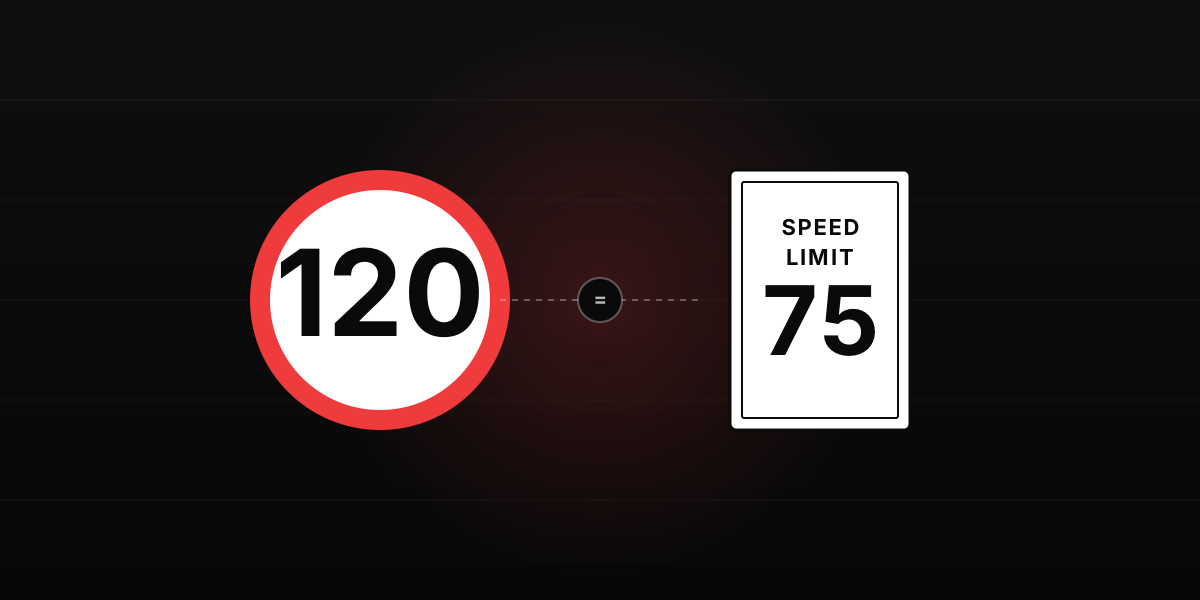
Seattle has a 25 mph default limit on arterial streets and 20 mph on neighborhood streets, set by a 2016 Vision Zero ordinance that lowered the previous 30 and 25 mph defaults. City highways such as I-5 run up to 60 mph.
Seattle speed limits at a glance
| Road type | Limit |
|---|---|
| City streets (default) | 25 mph (40 kph) |
| Residential / school zones | 20 mph (32 kph) |
| Major roads / arterials | 30 mph (48 kph) |
| Highways through the city | 60 mph (97 kph) |
About speed limits in Seattle
In 2016 the Seattle City Council amended the Municipal Code to cut default speed limits citywide as part of its Vision Zero program. The arterial default dropped from 30 mph to 25 mph, and the non-arterial residential default fell from 25 mph to 20 mph, unless otherwise posted. The change covered downtown and roughly 1,250 miles of neighborhood streets, making 25 and 20 mph the baseline speeds Seattle drivers encounter on most city roads.
Seattle adopted Vision Zero in 2015 with a goal of eliminating traffic deaths and serious injuries by 2030, and the 2016 speed-limit reductions were among its most visible steps. The city framed lower limits as a response to its built environment and a shift toward walking, biking and transit. Corridors like 35th Ave SW were re-signed to 25 mph as part of this broader safety effort.
Neighborhood streets are the 20 mph default, and school zones drop to 20 mph when the beacons flash. Seattle has run fixed school-zone speed cameras since 2012, tied to the flashing beacons so they only cite drivers during active school-zone periods. The program has expanded steadily, reaching about 35 schools for the 2025-26 school year.
Seattle's main freeway, Interstate 5, is posted up to 60 mph through the city, though some crash-prone curves near Tacoma to the south are lowered to 50 mph. Highway speeding is enforced by officers rather than cameras, and the Washington State Patrol treats the posted limit as the ceiling for lawful driving.
Enforcement
Seattle uses fixed automated cameras in school zones, which issue tickets only when the school-zone beacons are flashing. General street and freeway speeding is enforced by Seattle Police and, on I-5 and other state highways, the Washington State Patrol.
Tolerance
Washington sets no official grace margin, and the posted limit is treated as the legal ceiling. School-zone cameras only activate when the beacons are flashing, so drivers are cited only during posted school-zone times.
Speeding fines in Seattle
Seattle school-zone camera tickets run about 237 dollars and are treated like a parking infraction, with no license points, no license effect, and no insurance impact. Officer-issued speeding tickets vary with the amount over the limit and do carry points on your record.
Frequently asked questions
What is the speed limit in Seattle?
The default is 25 mph on arterial streets and 20 mph on neighborhood residential streets, set by the 2016 Vision Zero ordinance. Interstate 5 through the city is posted up to 60 mph.
Why did Seattle lower its speed limits?
As part of its Vision Zero goal of eliminating traffic deaths by 2030, Seattle cut default limits in 2016, dropping arterials from 30 to 25 mph and neighborhood streets from 25 to 20 mph to improve safety for people walking and biking.
How do speed cameras work in Seattle?
Fixed school-zone cameras have operated since 2012 and are wired to the flashing beacons, so they only issue tickets when a school zone is active. The roughly 237 dollar ticket is treated like a parking fine with no license points.
Are there higher limits on Seattle highways?
Yes. Interstate 5 is posted up to 60 mph through Seattle, though it drops to 50 mph on some crash-prone curves near Tacoma. Highway speeding is enforced by the Washington State Patrol.
More Washington speed limits
- Washington speed limit — statewide interstate, highway, and city limits.
Related tools
- Convert MPH to KPH — convert any speed reading between units.
- Car speed test — verify your speedometer accuracy.
- Live GPS speedometer — see your actual speed in the browser.
- Stopping distance calculator — how far you need to brake from each speed.
- US speed limits overview — federal background and national patterns.