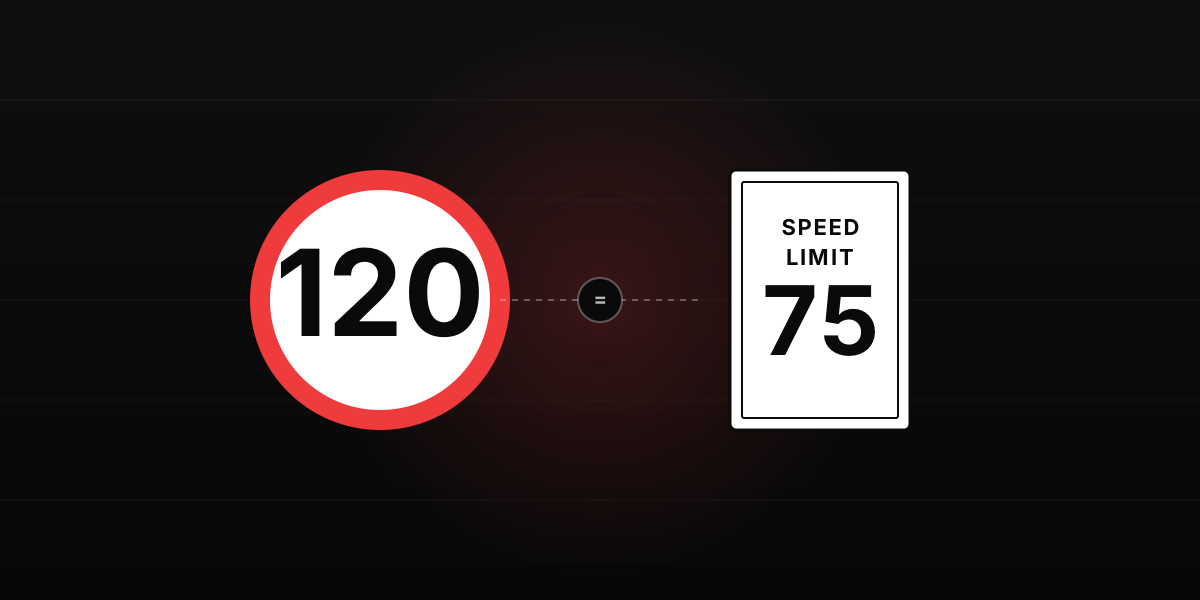
Alabama posts a maximum of 70 mph on interstates, with 65 mph on four-lane divided highways such as US 280 and US 431, and 55 mph on two-lane rural roads.
Alabama speed limits at a glance
| Road type | Limit |
|---|---|
| Cities, towns, business districts | 30 mph (48 kph) |
| Residential / school zones | 25 mph (40 kph) |
| Rural highways | 55 mph (89 kph) |
| Interstates / freeways | 70 mph (113 kph) |
About speed limits in Alabama
Alabama's maximum speed limit is 70 mph, applied on rural interstates including I-65, I-20, I-59, I-10 and I-85 under Code section 32-5A-171. Unusually for the Southeast, the 65 mph tier extends beyond freeways to ordinary four-lane divided highways like US 280, US 431 and US 231, so drivers see near-interstate speeds on roads with at-grade intersections. Two-lane paved rural highways default to 55 mph, unpaved roads to 35 mph, and interstates through Birmingham, Montgomery, Mobile and Huntsville typically drop to 60 mph. Where no sign is posted, the urban district default is 30 mph.
The 65 mph limit on divided non-freeway highways is Alabama's distinctive quirk — combined with driveways and cross traffic, it makes corridors like US 280 south of Birmingham notorious for high-speed crashes. Alabama law also sets a 35 mph default on unpaved roads, one of the few states to write a gravel-road limit directly into statute.
In cities, the default is 30 mph in urban districts, and residential streets in most Alabama municipalities are posted at 25 mph. School zones typically drop to 15 to 25 mph during posted hours, and local police enforce them aggressively at opening and dismissal times. County roads outside city limits revert to the 55 mph rural default unless posted otherwise.
Alabama has no statewide speed camera program and state courts and lawmakers have repeatedly pushed back on automated ticketing; a small number of cities experimented with photo enforcement under local acts, but camera-based speeding tickets remain rare to nonexistent. Enforcement instead comes from ALEA state troopers and local police, with periodic high-visibility campaigns on I-65 between Birmingham and the Gulf Coast during holiday travel periods.
Enforcement
ALEA highway patrol troopers cover the interstates with radar, lidar and unmarked units, supplemented by county sheriffs and municipal police, and small-town speed traps on US highways are a known feature of Alabama driving. Automated speed cameras are effectively absent.
Tolerance
There is no statutory grace margin, and while interstate enforcement often focuses on drivers well above the limit, small municipalities along 65 mph US highways are known to ticket close to the posted number where limits drop entering town.
Speeding fines in Alabama
A typical Alabama speeding ticket runs on the order of 150 to 300 dollars once municipal fees and court costs are added, with the exact amount varying by county and speed. Speeding adds 2 to 5 license points depending on severity, and 12 points in two years triggers suspension. Fines are doubled in active work zones.
Frequently asked questions
What is the maximum speed limit in Alabama?
70 mph on rural interstates such as I-65, I-20, I-59, I-10 and I-85. Urban interstate sections generally drop to 60 mph, and four-lane divided highways off the interstate system are posted at 65 mph.
Why are some non-interstate highways in Alabama posted at 65 mph?
Alabama law allows 65 mph on four-lane divided highways even when they have at-grade intersections, so routes like US 280 and US 431 carry near-interstate limits. That mix of high speed and cross traffic is why several of these corridors have poor crash records.
What is the residential speed limit in Alabama?
The default urban district limit is 30 mph, and most municipalities post residential streets at 25 mph. School zones typically drop to 15-25 mph during posted hours, and unpaved roads default to 35 mph statewide.
Does Alabama use speed cameras?
Essentially no. Alabama has no statewide automated enforcement law, and camera-based speeding tickets are rare to nonexistent — a few cities briefly tried photo enforcement under local legislation, but speeding citations come almost entirely from officer traffic stops.
Speed limits in nearby states
- Florida speed limit — interstate, rural highway, and city limits.
- Georgia speed limit — interstate, rural highway, and city limits.
- Tennessee speed limit — interstate, rural highway, and city limits.
- Mississippi speed limit — interstate, rural highway, and city limits.
Related tools
- Convert MPH to KPH — convert any speed reading between units.
- Car speed test — verify your speedometer accuracy.
- Live GPS speedometer — see your actual speed in the browser.
- Stopping distance calculator — how far you need to brake from each speed.
- US speed limits overview — federal background and national patterns.