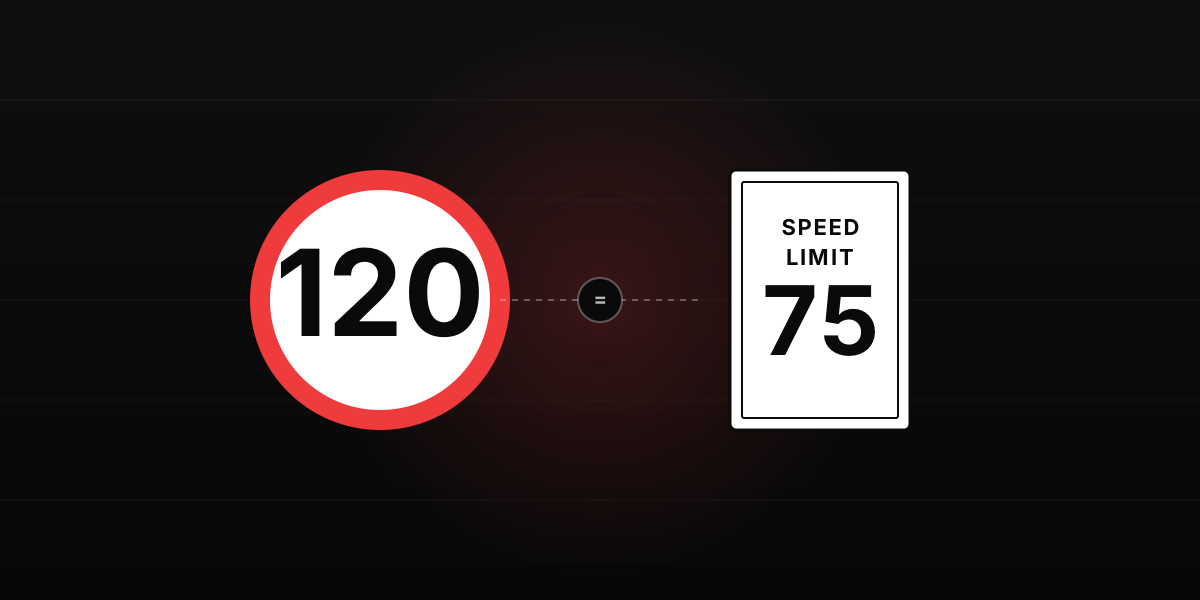
Georgia posts a maximum of 70 mph on rural interstate highways and 65 mph on many divided highways, dropping to 30 mph in residential and urban districts. The state is best known for its Super Speeder law, which adds a $200 state fee on top of local fines for anyone convicted of driving 85 mph or faster on any road, or 75 mph or more on a two-lane road.
Georgia speed limits at a glance
| Road type | Limit |
|---|---|
| Cities, towns, business districts | 30 mph (48 kph) |
| Residential / school zones | 30 mph (48 kph) |
| Rural highways | 65 mph (105 kph) |
| Interstates / freeways | 70 mph (113 kph) |
About speed limits in Georgia
Georgia caps rural interstate travel at 70 mph, applied along I-75, I-85, I-16 and I-95, with 65 mph common on multi-lane divided highways and 55 mph on many two-lane state routes. Unpaved county roads default to 35 mph and residential and urban streets to 30 mph unless posted otherwise. Limits inside metro Atlanta are frequently posted below the rural maximum because of congestion and dense interchanges.
Georgia's signature law is the Super Speeder statute. A driver convicted of going 85 mph or more on any road, or 75 mph or more on a two-lane road, owes a $200 state fee in addition to whatever fine the local court imposes. The fee is billed by the Department of Driver Services after conviction, and failing to pay within 120 days leads to license suspension, requiring the $200 fee plus a $50 reinstatement fee to restore driving privileges. The threshold is absolute and applies regardless of the posted limit on that road.
In cities the default is 30 mph on residential and urban streets, and school zones are typically posted at 25 mph, though some are lower. School-zone speeding is penalized heavily, with fines that can range from about $150 to $500 or more depending on how far over the limit the driver was.
Georgia authorizes automated speed cameras specifically in school zones under state law, and cities such as Savannah and many metro-Atlanta jurisdictions have installed them to ticket speeders during school hours. Debate over these programs has grown, with several legislative efforts in recent sessions to tighten or restrict school-zone camera use amid complaints about revenue-driven enforcement.
Enforcement
Enforcement combines Georgia State Patrol and local radar and laser patrols with automated speed cameras allowed in school zones. The Super Speeder program adds an automatic state fee after any high-speed conviction, layered on top of the local penalty.
Tolerance
Officers commonly overlook a small margin on open interstates, but the Super Speeder thresholds of 85 mph anywhere and 75 mph on two-lane roads are hard lines that trigger the extra fee, and school-zone cameras leave little slack.
Speeding fines in Georgia
Local speeding fines vary by county and generally run from roughly $25 to over $500 depending on speed and court costs. On top of that, a Super Speeder conviction adds a flat $200 state fee, and school-zone violations can range from about $150 to $500 or more; unpaid Super Speeder fees lead to license suspension and a further $50 reinstatement charge.
Frequently asked questions
What is the maximum speed limit in Georgia?
The maximum is 70 mph on rural interstate highways such as I-75, I-85 and I-16. Divided highways are commonly 65 mph, two-lane state routes are often 55 mph, and metro-Atlanta interstates are frequently posted lower due to congestion.
What is Georgia's Super Speeder law?
It adds a $200 state fee, on top of any local fine, for drivers convicted of going 85 mph or more on any road or 75 mph or more on a two-lane road. The fee is billed after conviction, and not paying it within 120 days suspends your license until you pay the $200 plus a $50 reinstatement fee.
What is the residential and school-zone speed limit in Georgia?
The default on residential and urban streets is 30 mph, and school zones are typically 25 mph, sometimes lower. School-zone speeding carries elevated fines that can reach $500 or more.
Does Georgia use speed cameras?
Yes, in school zones. State law lets cities install automated speed cameras that ticket drivers during school hours, and jurisdictions including Savannah and parts of metro Atlanta use them. The programs are increasingly debated in the legislature.
City speed limits in Georgia
- Atlanta speed limit — city defaults, school zones, and camera enforcement.
Speed limits in nearby states
- Florida speed limit — interstate, rural highway, and city limits.
- Tennessee speed limit — interstate, rural highway, and city limits.
- North Carolina speed limit — interstate, rural highway, and city limits.
- South Carolina speed limit — interstate, rural highway, and city limits.
- Alabama speed limit — interstate, rural highway, and city limits.
Related tools
- Convert MPH to KPH — convert any speed reading between units.
- Car speed test — verify your speedometer accuracy.
- Live GPS speedometer — see your actual speed in the browser.
- Stopping distance calculator — how far you need to brake from each speed.
- US speed limits overview — federal background and national patterns.