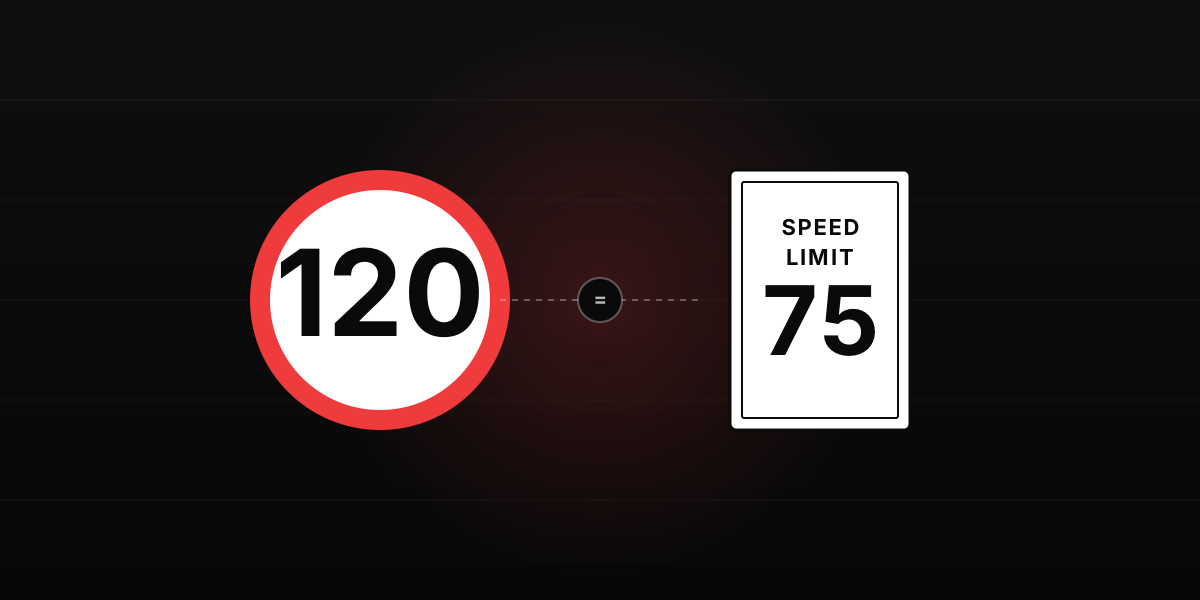
Florida posts a maximum of 70 mph on rural interstates, limited-access highways and the Florida Turnpike, and 65 mph on rural divided highways. Most other open roads are 55 mph, dropping to 30 mph in business and residential districts and 20 mph in active school zones unless a sign says otherwise.
Florida speed limits at a glance
| Road type | Limit |
|---|---|
| Cities, towns, business districts | 30 mph (48 kph) |
| Residential / school zones | 30 mph (48 kph) |
| Rural highways | 65 mph (105 kph) |
| Interstates / freeways | 70 mph (113 kph) |
About speed limits in Florida
Florida caps most interstate and limited-access travel at 70 mph, including long runs of I-75, I-95, I-4 and the Florida Turnpike. Rural divided highways are generally 65 mph, undivided rural roads 60 mph, and other roads 55 mph by default. During the 2026 legislative session, lawmakers debated Senate Bill 1220, which contained an amendment to let the state raise limits to 80 mph; the change was contested and had not taken effect as of mid-2026, so 70 mph remains the operative statewide maximum.
Florida is well known for its Move Over law, which requires drivers to shift a lane away from any stopped emergency, law-enforcement, utility, tow or service vehicle, or to slow to at least 20 mph below the posted limit when moving over is not safe. As of January 2025 the law was expanded to cover any vehicle on the shoulder with hazard lights, flares or emergency signage, including ordinary disabled cars. The state runs high-visibility Move Over enforcement campaigns, especially each January during Move Over Month.
In cities the default is 30 mph in business and residential districts, and school zones are posted at 20 mph during arrival and dismissal hours. Florida also has a widely discussed left-lane courtesy law and dedicates strong enforcement to school-zone speeding, which carries elevated penalties.
Florida increasingly uses automated school-zone speed cameras. Under state law municipalities may deploy speed-detection systems in school zones that ticket drivers going more than 10 mph over the limit during posted hours, with a $100 civil fine and zero license points. The programs have proven controversial: one county's school-zone cameras generated tens of thousands of citations and related license suspensions in 2026, fueling ongoing debate over automated enforcement.
Enforcement
Florida uses a mix of Highway Patrol and local radar and laser patrols plus a fast-growing network of automated school-zone speed cameras authorized under state law. The state runs high-visibility Move Over enforcement, particularly during its January awareness campaign.
Tolerance
Officers on interstates often tolerate a few mph, but school-zone cameras are calibrated to ticket at more than 10 mph over the posted limit, so the practical margin in camera zones is narrow.
Speeding fines in Florida
Ordinary speeding fines vary by county and typically run from roughly $100 to $250 for moderate offenses, climbing sharply for higher speeds and in school or work zones. Automated school-zone camera tickets carry a fixed $100 civil penalty with no license points, while exceeding the limit by 30 mph or more or reaching 50 mph over can trigger mandatory court appearances and much steeper penalties.
Frequently asked questions
What is the maximum speed limit in Florida?
The maximum is 70 mph, posted on rural interstates, limited-access highways and the Florida Turnpike. Rural divided highways are generally 65 mph and most other open roads default to 55 mph. A 2026 proposal to raise the cap to 80 mph was debated but had not taken effect as of mid-2026.
What is Florida's Move Over law?
Drivers must move over a lane from any stopped emergency, service, utility, tow or disabled vehicle, or slow to 20 mph below the posted limit if moving over is unsafe. Since January 2025 it covers any vehicle on the shoulder showing hazard lights, flares or emergency signage.
What is the residential and school-zone speed limit in Florida?
The default in business and residential districts is 30 mph, and school zones are 20 mph during posted arrival and dismissal hours. Both apply unless a sign indicates otherwise.
Does Florida use speed cameras?
Yes, increasingly. State law lets municipalities run automated school-zone speed cameras that ticket drivers going more than 10 mph over the limit during school hours, with a $100 fine and no license points. The programs are widespread but politically contested.
City speed limits in Florida
- Miami speed limit — city defaults, school zones, and camera enforcement.
Speed limits in nearby states
- Georgia speed limit — interstate, rural highway, and city limits.
- Alabama speed limit — interstate, rural highway, and city limits.
Related tools
- Convert MPH to KPH — convert any speed reading between units.
- Car speed test — verify your speedometer accuracy.
- Live GPS speedometer — see your actual speed in the browser.
- Stopping distance calculator — how far you need to brake from each speed.
- US speed limits overview — federal background and national patterns.