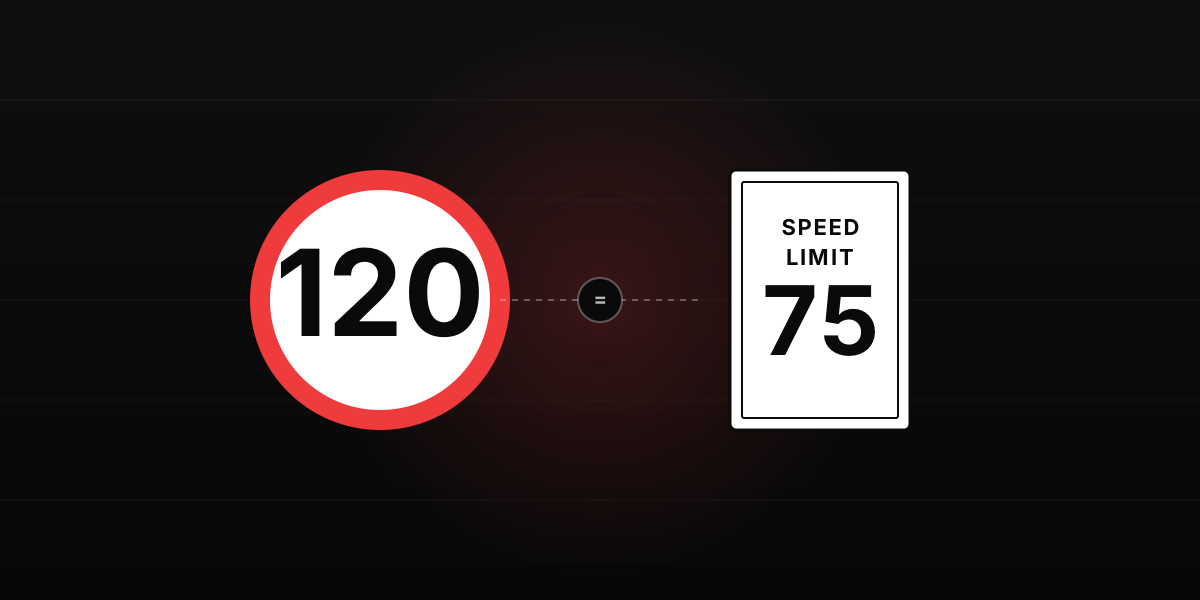
Arkansas posts 75 mph on rural interstates such as I-40 and I-30, 65 mph on urban interstates and rural multi-lane highways, and 55 mph on two-lane roads.
Arkansas speed limits at a glance
| Road type | Limit |
|---|---|
| Cities, towns, business districts | 30 mph (48 kph) |
| Residential / school zones | 30 mph (48 kph) |
| Rural highways | 55 mph (89 kph) |
| Interstates / freeways | 75 mph (121 kph) |
About speed limits in Arkansas
Arkansas joined the 75 mph states in 2020. Act 784 of 2019 authorized the higher limit, and after an engineering review the State Highway Commission approved it in June 2020, with new signs going up on rural interstates from July 2020 onward. Long rural stretches of I-40, I-30, I-55, I-530, I-49 and I-555 now carry 75 mph for cars, while trucks over 26,000 pounds are held to 70 mph on the same roads. Urban interstates through Little Rock, Fayetteville and other metro areas rose to 65 mph at the same time, and rural multi-lane divided highways also run at 65 mph.
The 2020 change was not blanket: segments with substantial curves, interchanges or urban character kept lower limits, so the posted number on an Arkansas interstate can shift several times along one trip. Arkansas also layers a basic speed law on top of its absolute limits — driving faster than is reasonable for conditions can be ticketed even below the posted maximum, which matters in Ozark hill country and in the fog and ice the I-40 corridor sees each winter.
In cities, the statutory default for urban districts is 30 mph, though many Arkansas cities post residential neighborhoods at 25 mph by ordinance. School zones typically drop to 25 mph or lower during posted hours, and state law restricts camera use near school safe zones and on streets posted under 45 mph.
Arkansas has effectively no ticket-by-mail camera enforcement, with one narrow exception: Act 707 of 2023 authorized automated speed enforcement in interstate work zones, where a camera flags a speeding vehicle and relays it to an officer stationed downstream who decides whether to stop the driver and issue a warning or citation. Outside active work zones, every Arkansas speeding ticket still comes from a trooper or local officer.
Enforcement
The Arkansas State Police patrol the interstates with radar and lidar, and enforcement is officer-based statewide. The only automated element is in interstate work zones, where Act 707 of 2023 lets cameras alert a downstream officer who makes the actual stop.
Tolerance
Limits are absolute, so no buffer is guaranteed, but on 75 mph rural interstates troopers generally prioritize drivers well above the flow of traffic. Expect much tighter enforcement in work zones and through small towns on US highways.
Speeding fines in Arkansas
Fines vary by county but a typical ticket runs from under 100 dollars to a few hundred dollars once court costs are added, and Arkansas assesses 3 to 8 points depending on how far over the limit you were. Work-zone and school-zone violations carry enhanced penalties.
Frequently asked questions
What is the maximum speed limit in Arkansas?
The maximum is 75 mph on rural interstates, in effect since July 2020 under Act 784 of 2019. Trucks over 26,000 pounds are limited to 70 mph on those same roads, and urban interstates are posted at 65 mph.
When did Arkansas raise its interstate speed limit to 75 mph?
The legislature passed Act 784 in April 2019, the State Highway Commission signed off in June 2020 after a speed study, and crews posted the new 75 mph signs on rural interstates starting in July 2020. Curvy and urban segments kept lower limits.
What is the residential speed limit in Arkansas?
The statutory default in urban districts is 30 mph, though many cities post residential streets at 25 mph by local ordinance. School zones drop to around 25 mph or lower during posted hours.
Does Arkansas use speed cameras?
Not for ordinary ticket-by-mail enforcement. The only automated program, created by Act 707 of 2023, operates in interstate work zones, and even there a camera only alerts an officer stationed downstream who personally issues any warning or citation.
Speed limits in nearby states
- Texas speed limit — interstate, rural highway, and city limits.
- Tennessee speed limit — interstate, rural highway, and city limits.
- Missouri speed limit — interstate, rural highway, and city limits.
- Oklahoma speed limit — interstate, rural highway, and city limits.
- Louisiana speed limit — interstate, rural highway, and city limits.
Related tools
- Convert MPH to KPH — convert any speed reading between units.
- Car speed test — verify your speedometer accuracy.
- Live GPS speedometer — see your actual speed in the browser.
- Stopping distance calculator — how far you need to brake from each speed.
- US speed limits overview — federal background and national patterns.