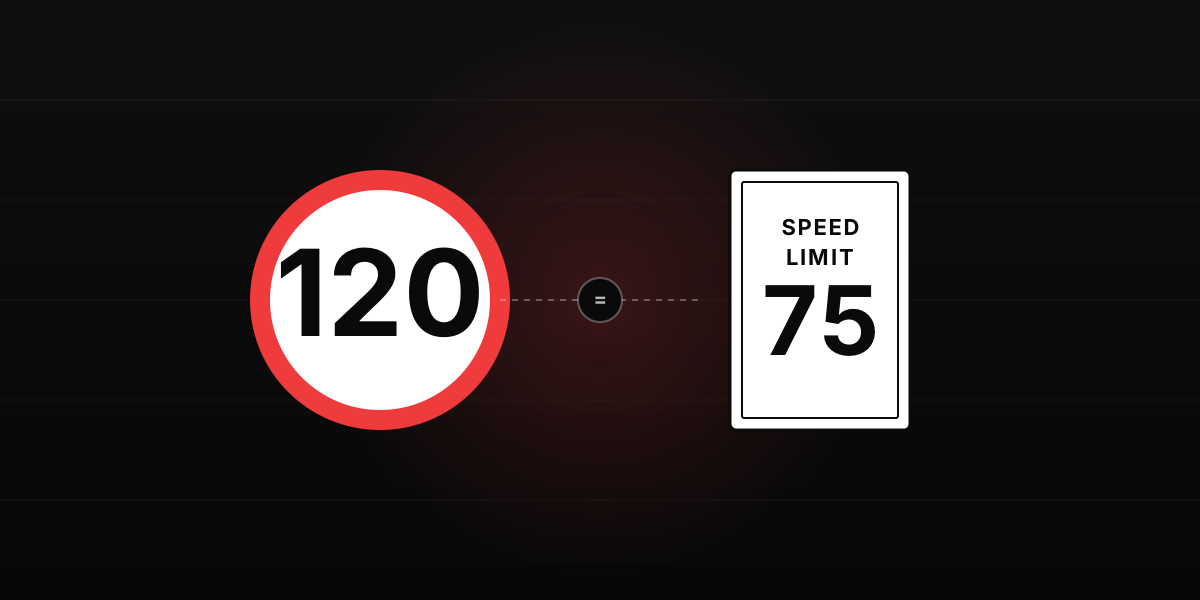
Colorado caps speed at 75 mph, posted on rural stretches of I-25, I-70 and I-76, while urban freeways around Denver typically run 55-65 mph. The state stands out for its enforceable variable speed limits on the I-70 mountain corridor and a left-lane law that bans cruising in the passing lane wherever the limit is 65 mph or higher.
Colorado speed limits at a glance
| Road type | Limit |
|---|---|
| Cities, towns, business districts | 30 mph (48 kph) |
| Residential / school zones | 25 mph (40 kph) |
| Rural highways | 55 mph (89 kph) |
| Interstates / freeways | 65-75 |
About speed limits in Colorado
Colorado law bars any authority from posting a limit above 75 mph, and that ceiling appears only on rural interstate segments: portions of I-25 north and south of the Front Range cities, I-70 across the Eastern Plains and stretches of I-76 toward Nebraska. Closer to Denver, Colorado Springs and Fort Collins, freeway limits drop to 55-65 mph. Off the interstates, open two-lane highways generally default to 55 mph, while designated mountain highways can carry a 40 mph default when unsigned. The mix matters in practice because a single drive from the Kansas border to the mountains can pass through five or six different posted limits, and the Colorado State Patrol enforces each zone as posted rather than applying one statewide figure.
The I-70 mountain corridor west of Denver is Colorado's signature speed-management project. CDOT operates electronic variable speed limit signs on segments including eastbound Idaho Springs to Georgetown and, since January 2026, Dowd Canyon west of Vail, where 18 signs adjust the legal limit in real time based on snow, ice, congestion and visibility. The State Patrol treats the number displayed as the enforceable limit, not a suggestion. Colorado also has a strict left-lane law: on multi-lane highways posted 65 mph or above, the far-left lane is reserved for passing or turning left, and lane campers can be cited with fines and license points.
Inside cities the default is 30 mph in business districts and 25 mph on residential streets unless signs say otherwise, and Denver has lowered many neighborhood streets to 20-25 mph under its Vision Zero program. School zones are typically posted at 20-25 mph with flashing beacons during arrival and dismissal windows. On open mountain highways without posted signs, the statutory default is 40 mph, a quirk that surprises drivers used to assuming 55 mph everywhere outside town.
Colorado has been expanding automated enforcement. Senate Bill 24-195 broadened the use of automated vehicle identification systems (AVIS), letting CDOT and local agencies run speed cameras on designated state highway corridors, mostly work zones and high-crash segments. In an active CDOT AVIS corridor, driving 10 mph or more over the limit brings a $75 civil penalty by mail, with signs required in advance. Denver, Colorado Springs and other cities also run their own photo-speed vans in school zones and neighborhoods.
Enforcement
Enforcement combines Colorado State Patrol radar and aircraft-assisted patrols on interstates with a growing network of automated AVIS speed cameras on designated corridors and municipal photo-speed vans in school zones. On the I-70 mountain corridor, troopers enforce the electronic variable limit exactly as displayed.
Tolerance
Troopers have discretion and small overages on rural interstates often go unticketed, but CDOT's automated corridors set a hard trigger at 10 mph over the posted limit. In variable-limit zones and work zones, expect enforcement much closer to the posted number.
Speeding fines in Colorado
Colorado ties penalties to how far over the limit you were: minor overages bring modest fines and license points, while 25 mph or more over jumps to a class 2 misdemeanor traffic offense with substantially higher fines, and 25-plus over in a construction zone is treated more severely still. Automated AVIS corridor violations are a flat $75 civil penalty. Exact amounts vary by court and county surcharges.
Frequently asked questions
What is the maximum speed limit in Colorado?
The maximum is 75 mph, and state law prohibits posting anything higher. You will find 75 mph on rural sections of I-25, I-70 and I-76; urban freeways around Denver run 55-65 mph.
Are the electronic speed limit signs on I-70 legally enforceable?
Yes. The variable speed limit signs on the I-70 mountain corridor, including the Dowd Canyon segment activated in January 2026, display the actual legal limit for current conditions. The Colorado State Patrol can ticket you for exceeding the number shown, even when it is temporarily lowered for snow or congestion.
What is the residential speed limit in Colorado?
The statutory default is 25 mph on residential streets and 30 mph in business districts unless posted otherwise. Denver and other cities have lowered many neighborhood streets to 20-25 mph, and school zones typically drop to 20-25 mph when beacons flash.
Does Colorado use speed cameras?
Yes, and their use is expanding. Under SB 24-195, CDOT and local agencies can operate automated speed cameras (AVIS) on designated corridors, issuing $75 civil penalties for driving 10+ mph over. Cities like Denver also deploy photo-speed vans, mainly in school and neighborhood zones.
Speed limits in nearby states
- Utah speed limit — interstate, rural highway, and city limits.
- Arizona speed limit — interstate, rural highway, and city limits.
- New Mexico speed limit — interstate, rural highway, and city limits.
- Kansas speed limit — interstate, rural highway, and city limits.
- Wyoming speed limit — interstate, rural highway, and city limits.
Related tools
- Convert MPH to KPH — convert any speed reading between units.
- Car speed test — verify your speedometer accuracy.
- Live GPS speedometer — see your actual speed in the browser.
- Stopping distance calculator — how far you need to brake from each speed.
- US speed limits overview — federal background and national patterns.