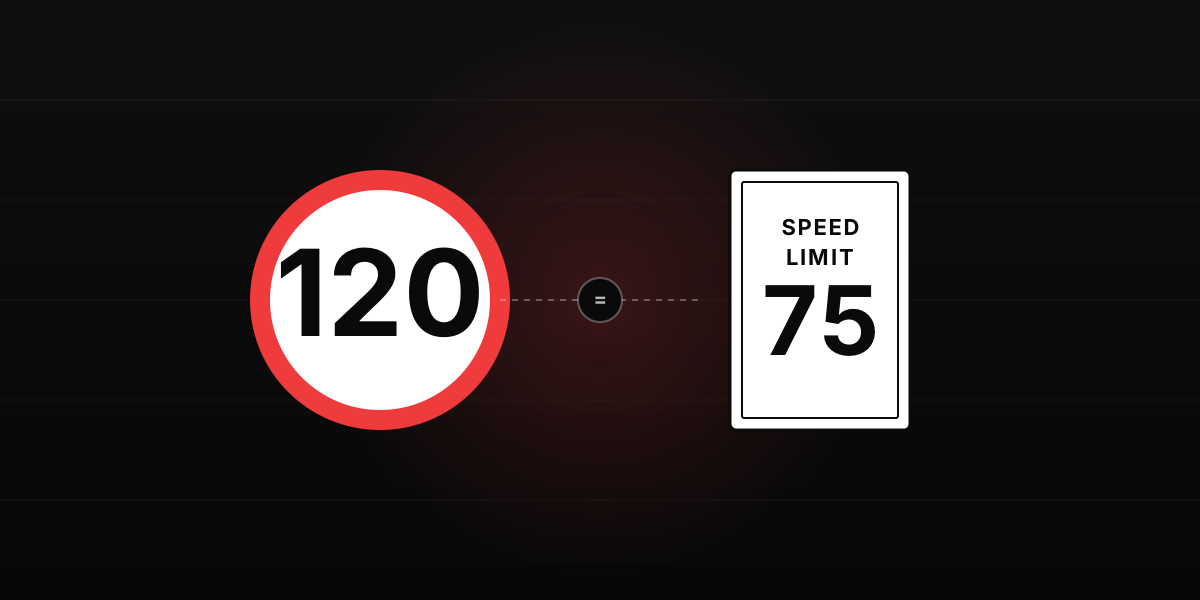
Wisconsin posts a 70 mph maximum on interstates and many freeways, 55 mph on most rural two-lane highways, and a 25 mph default on city streets.
Wisconsin speed limits at a glance
| Road type | Limit |
|---|---|
| Cities, towns, business districts | 25 mph (40 kph) |
| Residential / school zones | 25 mph (40 kph) |
| Rural highways | 55 mph (89 kph) |
| Interstates / freeways | 70 mph (113 kph) |
About speed limits in Wisconsin
Wisconsin raised its interstate maximum from 65 to 70 mph in June 2015, and the higher figure now applies across most of the interstate system, including long runs of I-90, I-94, I-39 and I-43, as well as sections of other divided freeways and expressways approved by WisDOT. Rural state and county highways default to 55 mph unless posted otherwise, while some four-lane divided highways carry 65 mph. Unlike several neighboring states, Wisconsin applies the same limits day and night and uses absolute limits, meaning any speed over the posted number is technically a violation.
Wisconsin is notable for its hard legal line against automated enforcement: statute 349.02(3) prohibits both state and local authorities from using photo radar speed detection, so no Wisconsin community can issue camera-based speeding tickets. The state also imposes an unusually swift penalty for extreme speed, with an immediate 15-day license suspension available for driving 25 mph or more over the limit in a 55 or 65 mph zone.
Inside cities and villages the default limit is 25 mph on residential streets and in business districts, with 35 mph common on larger urban arterials. School zones drop to 15 mph when children are present, and fines double in both school zones and highway work zones when workers are present.
Because photo enforcement is banned, all speeding tickets in Wisconsin come from officers, and the State Patrol runs regular high-visibility campaigns on I-90 and I-94 corridors, including aircraft speed enforcement marked by signs on major freeways. Periodic legislative proposals to allow cameras in Milwaukee have so far failed, leaving the statewide ban intact as of 2026.
Enforcement
Enforcement is entirely officer-based: State Patrol and local police use radar, laser and aircraft spotting, with dense coverage on the Milwaukee-Madison I-94 corridor and interstate work zones. Photo radar is prohibited by state law, so there are no speed cameras anywhere in Wisconsin.
Tolerance
Wisconsin uses absolute speed limits, so there is no legal buffer and a ticket is possible at 1 mph over. Anecdotally many officers focus on drivers roughly 10 mph or more above the limit on freeways, but that is discretion, not policy.
Speeding fines in Wisconsin
Base fines for a first offense typically run from about $30 for a few mph over to around $300 for the highest brackets, and court costs roughly double what drivers actually pay. Fines are doubled in work zones and school zones, and driving 25 mph or more over the limit in a 55 or 65 mph zone can bring an immediate 15-day license suspension on top of the fine and demerit points.
Frequently asked questions
What is the maximum speed limit in Wisconsin?
The maximum is 70 mph, in effect on interstates and many freeway segments since Wisconsin raised the cap in June 2015. Four-lane divided highways are often 65 mph, and rural two-lane highways default to 55 mph.
Are speed cameras legal in Wisconsin?
No. Wisconsin statute 349.02(3) bars state and local authorities from using photo radar speed detection, so no city in the state may issue automated speeding tickets. All enforcement is done by officers using radar, laser or aircraft.
What is the residential speed limit in Wisconsin?
The default is 25 mph on residential streets and in business districts within cities and villages, unless a different limit is posted. School zones drop to 15 mph when children are present.
What happens if you drive 25 mph over the limit in Wisconsin?
In a 55 or 65 mph zone, driving 25 mph or more over the limit exposes you to an immediate 15-day driver's license suspension in addition to a substantial fine and six demerit points. At those speeds officers rarely exercise leniency.
Speed limits in nearby states
- Illinois speed limit — interstate, rural highway, and city limits.
- Minnesota speed limit — interstate, rural highway, and city limits.
- Michigan speed limit — interstate, rural highway, and city limits.
- Iowa speed limit — interstate, rural highway, and city limits.
Related tools
- Convert MPH to KPH — convert any speed reading between units.
- Car speed test — verify your speedometer accuracy.
- Live GPS speedometer — see your actual speed in the browser.
- Stopping distance calculator — how far you need to brake from each speed.
- US speed limits overview — federal background and national patterns.