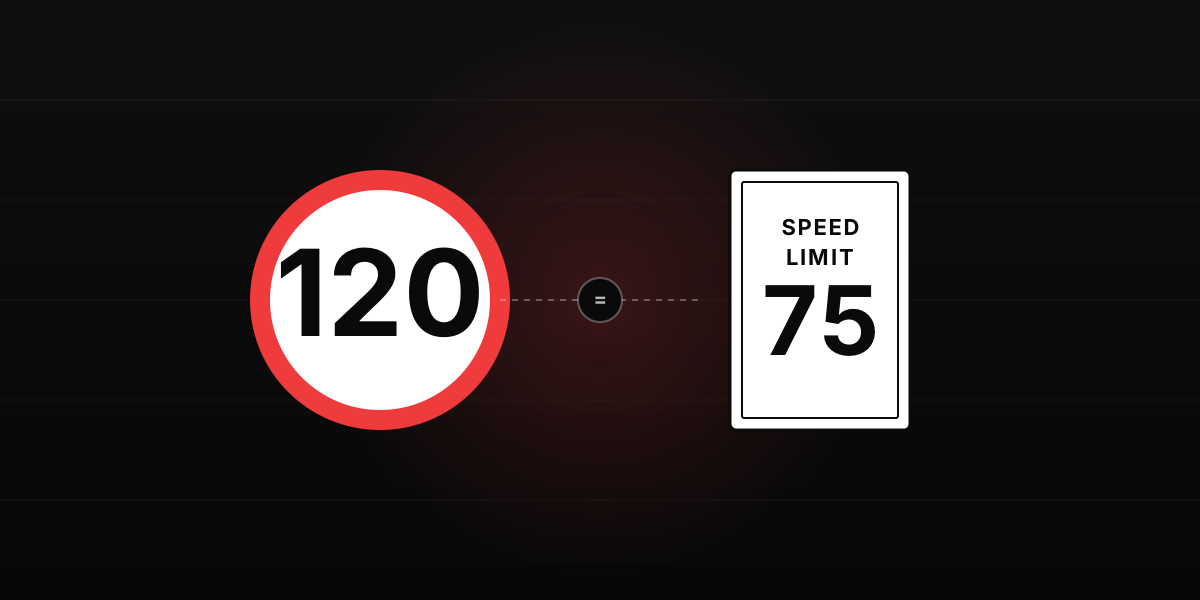
Denmark has steadily raised motorway speed limits since 2014, with several stretches now posted at 130 kph — up from a long-standing 110. The country maintains a dense network of speed cameras and strict enforcement. City and rural limits follow standard European patterns.
Speed limits at a glance
| Road type | Limit |
|---|---|
| In built-up areas (cities, towns) | 50 kph (31 mph) |
| Residential / school zones | 40 kph (25 mph) |
| Outside built-up areas (rural) | 80 kph (50 mph) |
| Motorways / expressways | 110-130 |
About speed limits in Denmark
Denmark raised the standard motorway limit from 110 to 130 kph on select sections starting in 2014. The change was driven by improvements in road quality and vehicle safety. As of 2026, about 30 percent of Danish motorway is posted at 130; the remainder stays at 110-120. Specific sections marked by signs.
The Storebæltsbroen (Great Belt Bridge) connecting Zealand and Funen carries a 110 kph limit despite being modern motorway — the limit was set lower for bridge safety. Other major Danish bridges (Øresund to Sweden, Lillebæltsbroen) similarly cap lower than open motorway.
Danish urban roads default to 50 kph but many cities have introduced 40 kph zones in residential areas. Copenhagen city center has extensive 30 kph zones. The Cykelby (cycle city) model means cyclists have substantial priority — drivers face strict liability in cyclist collisions regardless of speed.
Variable speed limit signs on major Danish motorways display real-time conditions: lower in rain, sometimes during peak traffic. The variable signs are legally binding. Section-control averaging is being expanded.
Enforcement
Denmark uses fixed cameras (ATK, automatisk trafikkontrol) extensively. Mobile radar is universal. Section-control averaging covers some motorway stretches. Politi (national police) uses marked and unmarked patrol cars. Cross-border EU enforcement is robust.
Tolerance
Tolerance is 3 kph below 100 kph and 3 percent above. So 134 kph on a 130 limit becomes 130 — exactly at limit, no fine. Stricter than European 5 percent norm.
Fines for speeding
DKK 1,000 for under 30 percent over the limit on motorway, rising to DKK 5,000+ plus license suspension for 50+ percent over. License loss at the roadside applies at 30+ percent over the limit. Denmark uses percentage thresholds rather than fixed kph for some categories.
Frequently asked questions
What is the Danish motorway speed limit?
110-130 kph depending on the section. Denmark raised select motorway sections from 110 to 130 starting in 2014; about 30 percent of motorway is now 130. The remainder is 110-120. Bridge sections (Storebælt, Øresund) cap at 110.
How strict are Danish speed cameras?
Strict. Tolerance is 3 kph below 100 kph and 3 percent above — stricter than the European 5 percent norm. The ATK fixed camera network is dense. Mobile radar operates everywhere. Section-control averaging covers some motorway stretches.
Why do Danish bridges have lower speed limits?
Wind exposure, structural loading, and accident-management priorities. The Storebæltsbroen and Øresund Bridge cap at 110 kph despite being motorway-grade. The Lillebæltsbroen is similar. Variable signs lower the limit further in high winds.
Do Danish fines reach foreign drivers?
Yes. Denmark is in the EU and participates in cross-border traffic enforcement. Foreign-plate vehicles get tickets forwarded through the EU framework. Hire cars debit the driver and add an admin fee.
Speed limits in other countries
Limits, tolerances and fines differ sharply across borders. These pages cover the same ground for every country we have researched.
- Australia
- Austria
- Belgium
- Canada
- France
- Germany
- Italy
- Japan
- Netherlands
- Norway
- Portugal
- Spain
- Sweden
- Switzerland
- Turkey
- United Kingdom
- United States
Related tools
- Convert KPH to MPH — convert any speed reading between units.
- Car speed test — verify your speedometer accuracy.
- Live GPS speedometer — see your actual speed in the browser.
- Stopping distance calculator — how far you need to brake from each speed.