Tools · Heart rate zones calculator
Heart rate zones calculator: bpm ranges for each training zone.
Updated 2026-05-21 · 7 min read
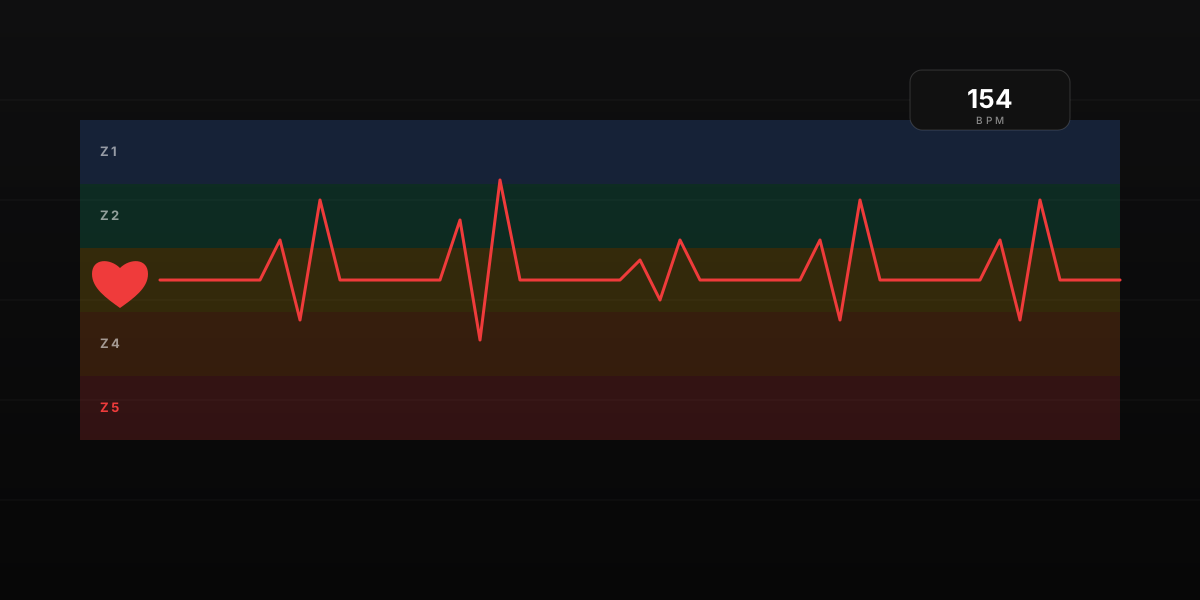
Enter your age. Optionally enter your resting heart rate (enables the more accurate Karvonen method) and your measured HRmax if you know it. The calculator returns the bpm range for all five training zones, along with a brief description of what each zone is for.
Training zones
| Zone | Name | % HRmax | bpm range | Used for |
|---|
What heart rate zones are
A heart rate zone is a range of beats per minute that corresponds to a specific training intensity. The zones go from very easy (Zone 1) to maximum (Zone 5). Each zone trains a different physiological adaptation: Zone 2 builds aerobic base, Zone 4 raises lactate threshold, Zone 5 improves VO2 max. Knowing your zone bpm ranges lets you train at the intensity a workout actually calls for, instead of guessing.
How to find your true HRmax
The most accurate way is a graded exercise test in a lab, which costs USD 100 to 300. The next best is a field test: warm up for 15 minutes, then run a 1.5-mile time trial as hard as you can sustain. The peak heart rate during the last 30 seconds, plus 5 bpm, is a reasonable estimate of HRmax. The 220-age formula is the worst option but the most convenient. A smartwatch's auto-detected HRmax is somewhere in between and usually underestimates by 5 to 10 bpm in trained athletes.
Karvonen vs. % HRmax method
The percent of HRmax method multiplies your maximum heart rate by a target percentage. Simple and convenient. The Karvonen method first subtracts your resting heart rate from HRmax to get heart rate reserve, then applies the percentage to that reserve, then adds resting HR back. The result personalizes the zones to your actual fitness: a fitter athlete with a low resting HR gets lower zone bpm targets than a less fit one with the same age. For serious training, Karvonen is the standard.
Related tools
- Marathon pace calculator — pair training intensity with required race pace.
- Pace converter — translate min/km, min/mile, mph, and kph.
- Live GPS speedometer — measure your actual training pace and speed.