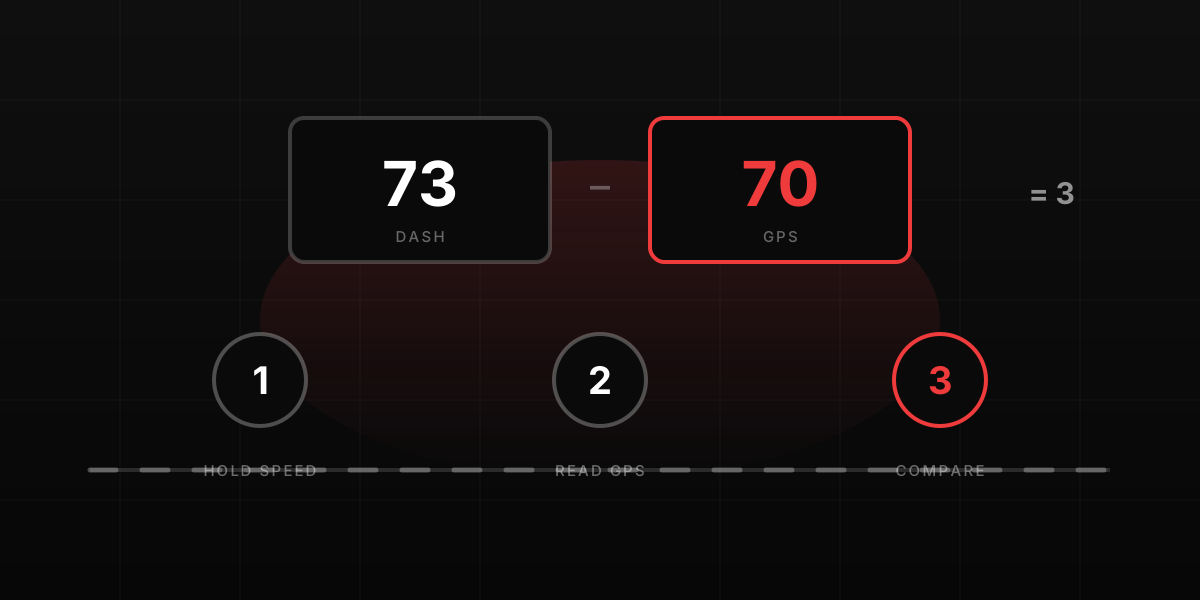
A car's dashboard speedometer is calibrated to read 2 to 5 mph high. That is the factory default; it is not a defect. But if you have non-stock tires, an aging vehicle, or just a healthy curiosity, the actual offset on your specific car is worth measuring. This guide shows you how, using only the phone already in your pocket, in about 10 minutes.
What you need
- A phone with a working GPS (any iPhone or Android from the past 5 years works)
- A car with cruise control. Manual cruise on the gas pedal is also fine but less precise.
- A flat, straight road with light traffic. A highway between cities at off-peak hours is ideal.
- About 10 minutes of driving time. The actual measuring is quick; getting to a good road takes most of it.
Step 1: open the speedometer
On your phone, open gpsspeedometer.io. Tap the "Begin" button and grant location permission when the browser asks. The dial will show "Acquiring" for 5 to 30 seconds while your phone locks onto satellites. Once the indicator turns green and reads "GPS Ready", you are ready to drive.
Mount the phone where you can glance at it without taking your eyes off the road for more than a moment. A windshield or air-vent mount works well. Do not hold the phone in your hand while driving.
Step 2: find the right road
GPS accuracy depends on a clear view of the sky. The test will give nonsense numbers if you try to do it in any of these:
- Tunnels (no signal at all)
- Multi-level interchanges (signal reflections)
- Roads lined with tall buildings (urban canyon effect)
- Roads under heavy tree cover (signal attenuation)
- Stop-and-go traffic (hard to hold a steady speed)
The ideal test road is a flat, straight, open highway with light traffic, where you can hold cruise control at a constant speed for 30 seconds at a time without slowing down or changing lanes. A two-lane country road or a quiet section of motorway works well. Avoid hills if you can; cruise control hunts up and down on grades, and the variation makes the comparison harder.
Step 3: run the test
Do the test at three speeds: 30 mph, 50 mph, and 70 mph (or 50 km/h, 80 km/h, and 110 km/h if you prefer metric). At each speed:
- Set cruise control to the target dashboard speed.
- Hold steady for at least 30 seconds. This lets both the cruise control and the GPS smoothing settle.
- Glance at the GPS reading on your phone. Note both numbers (dashboard and GPS).
- Move on to the next speed.
You can do all three within a few minutes on the same drive. Write the numbers down or have a passenger note them. Mental arithmetic at 70 mph is not a great idea.
Step 4: calculate the offset
For each pair of readings, calculate the percentage offset:
offset % = (dashboard − GPS) / GPS × 100
Example: dashboard reads 70, GPS reads 67. Offset = (70 − 67) / 67 × 100 = 4.5 percent over.
Do this for all three speed points and look at the pattern. Most factory cars show a consistent percentage offset, meaning the absolute mph error grows with speed. A typical recent car looks like this:
- Dashboard 30, GPS 29 → 3.4% over
- Dashboard 50, GPS 48 → 4.2% over
- Dashboard 70, GPS 67 → 4.5% over
That is a healthy, normal factory speedometer. The offset stays inside the legal envelope (10 percent + 4 km/h in the EU, 5 mph in the US), and it errs on the safe side.
Step 5: interpret the results
Compare your numbers to these reference cases:
Normal: 1 to 6 percent over, growing with speed
This is what 95 percent of factory cars look like. Nothing to fix. Drive by the dial, knowing that your real speed is a few mph below what the dashboard shows.
High: 7 to 12 percent over
Likely cause: small wheels, worn tires, or a non-stock tire size that is smaller than the factory specification. Check your tire size against the spec on the door sticker. If they match, the car was simply set on the high end of the legal margin from the factory; not all cars are tuned identically.
Under-reading at any speed
This is unusual and should be investigated. The most common cause is plus-sized aftermarket wheels with larger overall diameter than stock. The dashboard thinks the wheel is the original size; a larger wheel covers more ground per rotation, so you are actually moving faster than the dial says. Recalibration is recommended because under-reading is illegal in most countries and you could be speeding without knowing it.
Inconsistent (varies a lot between speeds)
Cruise control may be slipping, or you may be on a road that is too varied (hills, traffic, signal interruptions). Try a flatter road and ensure cruise is engaged before each measurement.
GPS reads zero or jumps wildly
This is the GPS, not the speedometer. You probably have weak satellite reception. Move to an open road or wait longer for the fix. Older phones (5+ years) sometimes lock on slowly; newer phones with multi-constellation receivers are dramatically faster.
What to do about a real discrepancy
If your speedometer is significantly off (more than 8 percent over or any amount under), here are your options:
- Check tire size first. The tire spec is printed on the sidewall in a format like P215/55R17. Compare to the original spec on the door sticker or in the owner's manual. Even a small change to a non-stock size can move the speedometer reading 3 to 5 percent.
- Check tire wear. Tires near the wear bars have a noticeably smaller circumference than new tires. Worn tires make the speedometer read higher.
- Check tire pressure. Severe under-inflation reduces effective rolling diameter. The effect is small (under 1 percent) but it adds up.
- Get the speedometer recalibrated. Modern cars allow firmware adjustment via OBD-II. A scan tool at any performance shop can correct the offset to match your tire size. Cost is typically 50 to 150 USD.
- Older cars: replace the cable or sensor. Pre-OBD cars have mechanical speedometer cables that wear with age. A specialist can replace or recalibrate, but the cost may exceed the value of the fix.
How often to retest
Once a year is plenty for most drivers. Tire wear over a typical year of driving moves the speedometer reading by about 1 to 2 percent. That is enough to notice on a careful test, not enough to drive differently.
Always retest after any of these:
- New tires (especially if a different size or brand)
- New wheels
- Suspension lift or drop
- Major drivetrain work
The takeaway
Most factory speedometers read 3 to 5 percent high, and that is fine. The 10-minute GPS test will tell you the exact offset on your specific car, on your specific tires, today. Once you know the offset, you can mentally subtract a few mph when reading the dial, or you can keep driving by the dashboard knowing that your true speed is comfortably below the posted limit.
To run the test now, open the live speedometer on your phone, or use our dedicated car speed test page which walks through the same steps with the GPS tool right on the page. For the physics of why GPS is more accurate than your dashboard, see how accurate is GPS speed in your phone. For the regulatory background on factory calibration, see why your car's speedometer reads different from GPS.