Tools · Multipoint pace calculator
Multipoint pace calculator: split-by-split analysis.
Updated 2026-05-23 · 6 min read
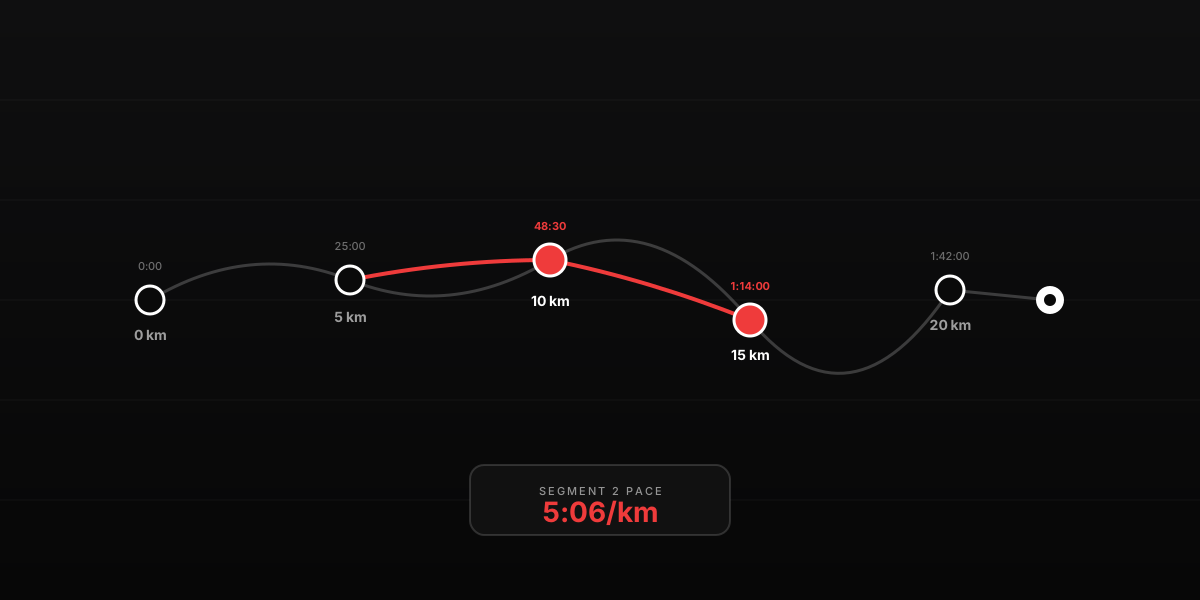
Enter the cumulative time at each checkpoint of your run or ride. The calculator computes the pace for every segment between consecutive checkpoints, plus the overall average. Add or remove rows as needed. The math runs in your browser.
How segment analysis helps
The average pace of a run hides the story of how you actually ran. A 5K finished in 25:00 averages 5:00/km — but you might have run the first km in 4:30, the second in 4:50, then 5:00, 5:10, and 5:30. The average is unchanged, but the pattern is a classic positive split (started too fast, faded). Knowing this lets you fix the pacing in the next race.
For a marathon, the difference between an even split and a positive split can be the difference between a personal best and a 30-minute fade in the final 10 km. Most marathon training plans emphasize pace discipline for exactly this reason. Reviewing segments after every long run builds the calibration to hold pace in the next race.
For interval workouts, the segments correspond to the work intervals themselves. A typical 8 × 400 m workout produces eight segment paces. The pattern across them reveals fitness: if intervals drift slower across the workout, you are at or above your sustainable interval pace. If they stay even or get faster, you have margin.
Common race-day pacing patterns
- Even split: all segments within ±5 seconds per km. Hardest to execute, most efficient for steady-state events. The default goal for first marathons.
- Negative split: the second half faster than the first by 1 to 3 percent. The gold standard for personal-best attempts; almost all world records are negative splits.
- Positive split: the second half slower, often by 10 percent or more. The most common amateur pattern, especially in marathons. Indicates the first half was too aggressive.
- Wave pacing: alternating faster and slower segments by design (e.g., on hilly courses or during fartlek training). Different from accidental fade.
Related tools
- Marathon pace calculator — forward-looking: target time + distance gives required pace.
- Pace converter — translate min/km, min/mile, mph, kph.
- Heart rate zones calculator — train at the right intensity.
- Calories burned running — MET-based calorie estimator.
- Live GPS speedometer — measure your real-time speed and pace.